Do disposable cameras expire? What the date means
Updated 19 November 2026
Yes. The camera won't stop working, but the film inside has a use-by date, printed on the package, usually about two years after it was made. Past that, photos slowly get grainier, flatter and darker. Heat ages film far faster than time does, so a camera kept cool a year past its date can beat one left in a hot car last week.
What actually expires
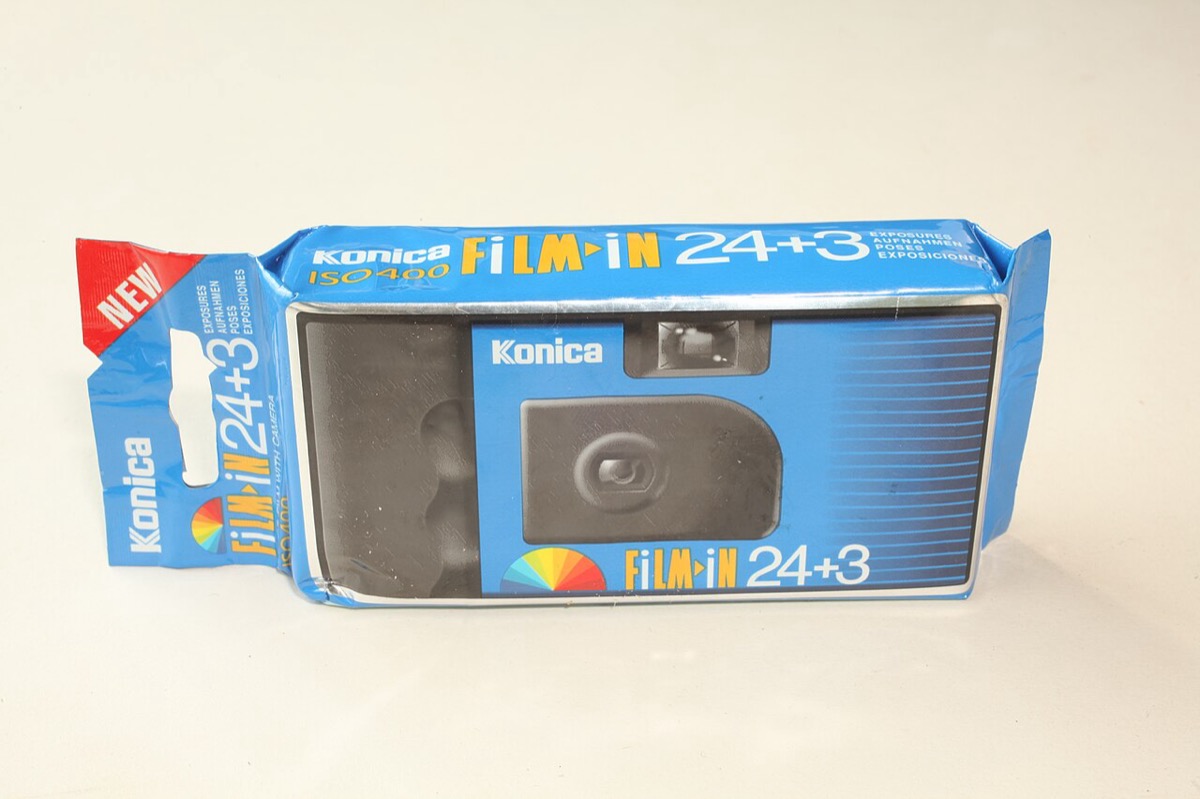
A disposable camera is a roll of film in a plastic box with a lens, a shutter and, on most, a flash with a built-in battery. What ages is the film inside and, on flash models, the battery.
Kodak's storage guide says to use film before the expiration date printed on the package for best results. Popular Photography puts most films' dates at about two years after the month they were made, and calls it more of a "best if used by" date than a cliff. A camera a few months past its date usually works fine. One that's ten years past is a gamble.
What happens to old film
Kodak explains that film's speed, contrast, colour balance and fog level change gradually after it's made, and that heat and humidity speed this up. Colour film, which is what nearly every disposable holds, is affected more than black-and-white, because its layers and dyes age at different rates. In practice, old film shows:
- Grain. Photos look rougher.
- Fog. A grey or coloured haze over the whole frame, which flattens contrast.
- Colour shifts. Colours drift and look washed out.
- Lost sensitivity. The film needs more light than it did when new.
Disposables age faster than most film, because they use fast film. Kodak's FunSaver, Power Flash and Daylight cameras all hold 800-speed film, and Fujifilm's QuickSnap Flash holds ISO 400. Kodak says higher-speed films are affected more by natural background radiation, which adds fog and grain even in a drawer. Popular Photography warns that film of ISO 800 and up "may age very rapidly".
Why an old disposable comes out dark
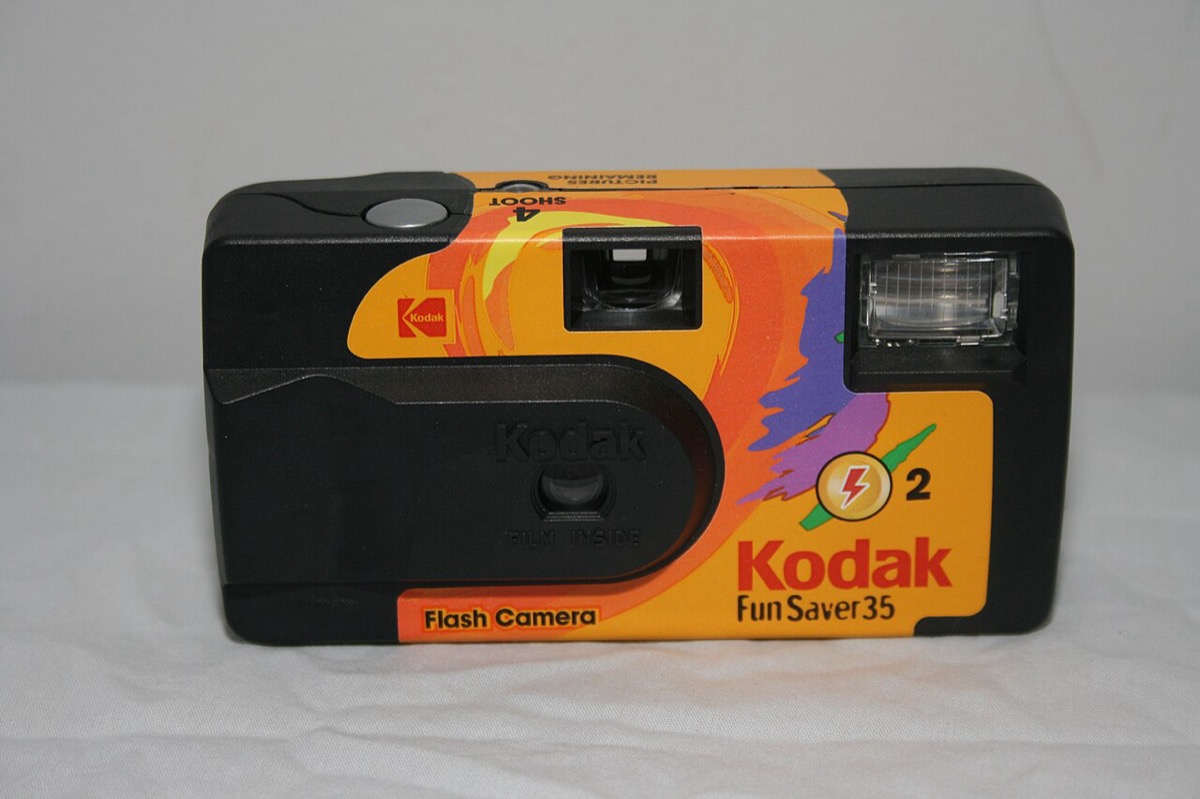
With an ordinary film camera you can make up for old film by giving it more light. Popular Photography's rule of thumb for colour negative film of unknown storage is one stop more for every decade since it expired. A disposable can't do that: it has one shutter speed and one aperture, so old film simply gets the same light new film would, and comes out underexposed.
The flash is the other weak point. Its battery is built in, and one wedding photographer warns that cheap wedding-branded cameras can come with old film and a flash that fails on a tired battery. If you're using an old camera anyway, shoot outdoors in good light, or with the flash charged and the people within a few steps. Here's why disposable photos come out dark, with each camera's flash range.
Heat does more harm than time
Kodak says its consumer films and single-use cameras can be stored at up to 21°C (70°F), but must be kept away from excessive heat, such as a car parked in the sun or an attic in summer. The glove compartment, the boot and the back shelf of a car in the sun all get very hot on a warm day. If a camera has to ride in a car in warm weather, Kodak suggests an insulated bag or a cool box.
A lab owner quoted by Popular Photography put it bluntly: a new roll of film left in a car for one day in July can come out "just awful". So:
- Keep cameras indoors, somewhere cool and dry, in their packaging until the day.
- At an outdoor summer wedding, keep the spares in the shade, not in a hot car or on a sunny table.
- When flying, carry cameras in your hand luggage. Kodak warns that the CT scanners used on checked bags can fog film, and the TSA suggests carry-on or a hand inspection. Here's how to get disposable cameras through airport security.
What to expect from an old camera
| The camera | What to expect |
|---|---|
| Within its date, kept indoors | Normal results. |
| A year or two past its date, kept indoors | Usually still usable. |
| About ten years past, unknown storage | Usable but changed. In Popular Photography's tests, colour film that had expired more than a decade earlier showed much more grain, a slight colour shift and weaker saturation. |
| Several decades old, or stored in an attic or a hot car | Heavy fog and colour loss, often very dark. Some rolls give almost nothing. |
| Any age, left in a hot car in summer | Can be badly fogged after a single day. |
These are tendencies, not guarantees. Two cameras with the same date can come out very differently depending on where they've been.
Found an old used camera?
If the counter shows shots were taken, the pictures are still in there and it's worth developing. A latent image fades and fog builds over the years, so the sooner the better, but rolls have come back after decades: Fstoppers tells how the Rescued Film Project developed soldiers' rolls from the Second World War that had sat exposed but unprocessed for roughly 70 years.
- Don't open the camera. Send or take the whole camera to a lab that develops disposables. Opening it lets light onto the film.
- Tell the lab it's old. For very old colour film, specialists such as Film Rescue International sometimes develop it as black-and-white, which can save images the colour process would lose.
- Keep expectations gentle. Fstoppers notes that most rescued rolls give ordinary snapshots, when they give anything at all.
Kodak advises developing exposed film promptly, and says exposed film can wait in a fridge for a few days in a sealed container if needed. Here's where to develop a disposable camera, and what it costs.
Want to try it? SEENCAM gives your guests one QR code. They shoot from their own phones with no app to download, and every photo develops together when the roll opens. Free for up to 10 guests.
Get SEENCAM on the App StoreBuying cameras for a wedding or party
- Check the date on every box before the day, and buy close to the event rather than a year ahead.
- Stick to known brands. The photographer above suggests Kodak or Fujifilm over novelty wedding cameras, whose film may already be old.
- Test one camera a few weeks before: shoot a few frames with the flash and have it developed.
- Store them cool until the day, then get them developed soon after. Exposed film keeps changing until it's processed.
How SEENCAM does it
SEENCAM is a disposable camera on your guests' own phones, so there's no film to expire and nothing to keep cool. You start a roll in the iPhone app and put one QR code on the tables. Guests scan it and shoot, with no app to download and no account: the camera opens as an App Clip on iPhone and in the browser on any other phone.
It keeps what people love about a disposable: each guest gets a set number of shots, nobody sees the photos until the time you choose, and guests pick from eight film looks, seeing the look live before they shoot. Every roll is free for up to 10 guests. A bigger party is a one-time purchase for that roll, with no subscription, and guests never pay.
Sources
- Storage and Care of KODAK Photographic Materials Before and After Processing, Kodak Alaris
- Storage and Handling of Unprocessed Film, Eastman Kodak
- Single-Use Cameras, Kodak Professional
- The complete guide to shooting expired film, Popular Photography
- The Undeveloped Film Market: The People Who Buy Strangers' Mystery Rolls at Estate Sales, Fstoppers
- Film, TSA
Related guides
A camera that never expires
Start a roll on your iPhone and put one QR code on the tables. Guests shoot on their own phones in real film looks, and every photo develops together when you choose. Free for up to 10 guests.
Get SEENCAM on the App Store